


Miami’s underground environment is unlike anything else in the country. The city sits on porous oolitic limestone just a few feet above sea level, the water table rises and falls with the tides, saltwater infiltration reaches deep into coastal pipe systems, and the ground beneath South Florida’s streets is getting wetter every year. Sea level rise is not a future risk in Miami. It is a present operational condition.
For contractors and engineers working on trenchless pipe rehabilitation across Miami-Dade County, Broward County, and the surrounding South Florida corridor, CIPP liner thickness is one of the most consequential decisions you make on any job. The loading environment here is extraordinarily demanding, and minimum-thickness specifications were not built for it.
What Makes Miami’s Underground Environment the Most Challenging in the Country
Oolitic limestone underlies most of Miami-Dade County. Unlike the dense bedrock familiar in northern markets, this porous formation allows water to move freely in all directions beneath the surface. Groundwater does not sit in discrete zones here. It saturates the limestone matrix throughout the formation, responds directly to tidal fluctuations along the Biscayne Bay and Atlantic coastlines, and rises with every significant rain event and storm surge.
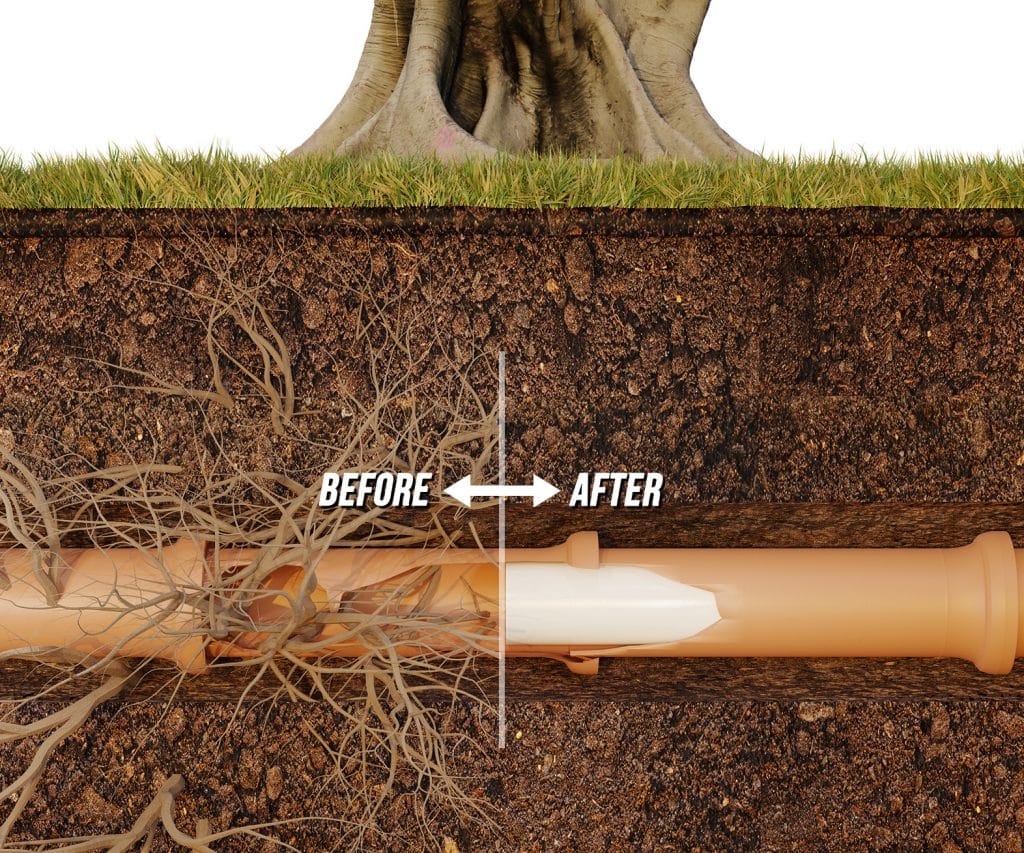
The practical result is that hydrostatic pressure on buried pipe systems in Miami is nearly constant and frequently extreme. A 2mm cured-in-place pipe liner operating near minimum ASTM F1216 thresholds in this environment is absorbing hydrostatic loading that few other markets in the country generate as a daily baseline condition. When a tropical weather system or king tide pushes that pressure higher, the margin disappears entirely.
Saltwater intrusion into coastal sewer infrastructure accelerates corrosion at rates that significantly exceed anything in inland markets. Combined with Miami’s year-round heat, the chemical environment inside aging host pipes is among the most corrosive in the country. Host pipes that look structurally viable from the outside often carry far less wall integrity than initial assessment suggests.
The Load Factors Miami Installers Cannot Underestimate
When evaluating CIPP liner thickness for a Miami or South Florida project, the structural loading environment includes:
- Tidal groundwater fluctuation in coastal zones throughout Miami Beach, Brickell, Coconut Grove, and the barrier island corridors driving daily hydrostatic pressure variation
- Permanently elevated and rising water tables across Miami-Dade County as sea level rise compounds existing high-groundwater conditions
- Oolitic limestone geology allowing water to move freely beneath pipe systems in all directions, creating pressure from multiple angles simultaneously
- Saltwater intrusion accelerating sulfide corrosion in coastal host pipes at rates that shorten effective service life well below design expectations
- Chronic sunny-day flooding across low-lying neighborhoods including Little Havana, Hialeah, and the Flagami area, driving persistent soil saturation and pipe loading cycles
- Rapid urban density increases from Miami’s ongoing development boom placing heavier vehicle and structural loads on underground corridors not designed for current volumes
- Miami-Dade Water and Sewer Department specifications reflecting the region’s unique sea level rise exposure and the long-term performance requirements built into current capital program contracts
A 2mm CIPP liner may satisfy minimum ASTM F1216 requirements in a stable, low-groundwater environment. Miami does not have a stable, low-groundwater environment, and it is not going to develop one.
Why Sea Level Rise Makes Every Liner Selection Decision More Permanent
Infrastructure decisions made in Miami today are being made against a backdrop of measurable, ongoing sea level rise. South Florida has experienced more than a foot of sea level rise since 1900, and the rate is accelerating. Pipe systems rehabilitated today will be operating in conditions that are materially more hydrologically demanding in ten years than they are right now.
A 3mm CIPP liner installed today is not over-engineering for current conditions. It is appropriate engineering for the conditions that will exist at the midpoint of its service life. A 2mm liner installed today is a minimum-margin solution that will be operating in a more demanding hydrostatic environment before its warranty period is even halfway through.
Miami-Dade Water and Sewer Department’s capital improvement programs are explicitly designed around long-term infrastructure resilience in the context of sea level rise. Contractors performing work under MDWASD contracts are not just being evaluated on today’s conditions. They are being evaluated on whether their installations will hold up as those conditions change.
Why 3mm Is the Right Specification for South Florida Work
A 3mm CIPP liner provides the structural margin that Miami’s extraordinary underground environment demands. The advantages are specific and urgent:
- Greater resistance to the tidal and storm-surge-driven hydrostatic pressure fluctuations common across coastal Miami-Dade and Broward County installations
- Improved sewer liner structural capacity in deteriorated host pipes weakened by saltwater infiltration and accelerated sulfide corrosion
- More installation forgiveness when oolitic limestone groundwater movement creates pressure conditions that differ from pre-job assessments
- Enhanced long-term pipe liner durability in a chemically aggressive, permanently wet underground environment with a rising water table baseline
- Reduced callback exposure and stronger warranty standing on MDWASD capital improvement and county rehabilitation contracts
- Defensible CIPP structural requirements for Miami-Dade County engineering review and long-term infrastructure resilience documentation
For engineers writing specifications on Miami-Dade rehabilitation contracts, 3mm is the specification you can defend not just at installation review, but at the ten-year performance audit.
The Calculation That Miami Cannot Afford to Skip
ASTM F1216 liner calculations capture burial depth, soil type, groundwater pressure, live loads, and host pipe condition. In Miami, where the groundwater baseline is rising annually and tidal fluctuation affects hydrostatic loading on a daily cycle, a calculation built on static conditions has a shorter useful life than in any other market in the country. Those calculations are still necessary. They just need to be run with honest site projections, not pulled from a standardized table that wasn’t designed for a water table that moves with the tides.
Before specifying a 2mm liner on any Miami or South Florida project, one question requires a clear and fully documented answer: Have the ASTM F1216 calculations been completed for this specific installation, and do they account for the groundwater conditions that will exist at this site over the liner’s full service life?
If the answer to either part is no, the specification is not complete. Install 3mm.
Build for the Ground Miami Is Becoming
Miami’s rehabilitation market is active, growing, and operating under some of the most demanding long-term performance expectations of any infrastructure program in the country. The contractors and engineers building durable records in this market are positioning themselves for a decade of sustained work in one of the most consequential urban rehabilitation environments in the United States. Those cutting margins on liner thickness are building an exposure problem that gets more expensive with every inch the water rises.
The water table is high. The tides move it higher. The heat accelerates everything.
Build for what is actually there, and for what is coming. Install 3mm.