






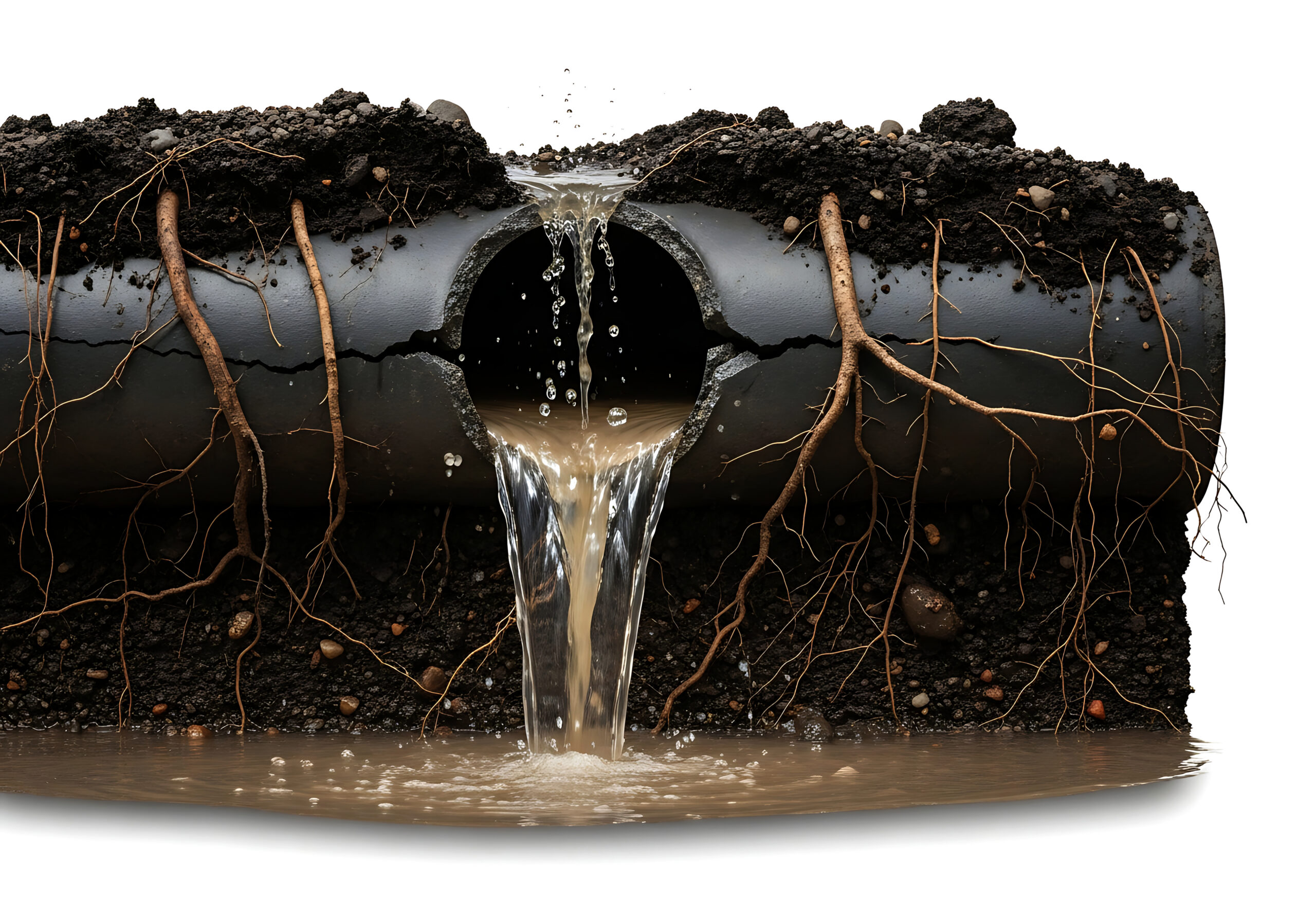
Miami’s underground sits at the front line of sea level rise. Groundwater tables across Miami-Dade County have climbed measurably over the past two decades, and porous limestone bedrock lets that water move through the ground with almost no resistance.
For engineers and contractors managing sewer rehabilitation across Miami-Dade, inflow and infiltration (I&I) is a compounding problem tied directly to a rising coastline. Miami-Dade Water and Sewer’s consent decree work has kept I&I reduction central to capital planning, and recent king tide events and hurricane seasons have only sharpened the urgency.
A Coastline That Keeps Finding New Ways In
Cracked pipes, deteriorating joints, and worn manhole structures give groundwater a way into Miami’s collection system, textbook infiltration. Inflow enters more directly, through roof drains, foundation drains, and other connections wired straight into the sanitary line.
Both draw down sewer capacity fast when a rising water table pushes against every buried pipe, all the time. Miami’s porous limestone means groundwater is not an occasional visitor. It is a constant, growing pressure on a wastewater collection system that was not built for today’s water levels.
Limestone Doesn’t Stop at the Edge of the Liner
Miami-Dade crews use CIPP to renew deteriorated mains without disruptive open-cut work near a coastal water table that’s already fragile, and that approach protects the trunk line well. The porous limestone beneath everything else in the system isn’t nearly as cooperative.
A freshly lined main in Miami doesn’t necessarily mean lower infiltration readings, because the limestone bedrock underneath lets groundwater reach laterals, connections, and manholes from nearly any direction. A joint that sat safely above the water table a decade ago may now sit below it, regardless of the mainline’s condition.
Common infiltration sources across Miami’s neighborhoods include:
- Deteriorated laterals beneath older Little Havana and Coral Way properties
- Failed main-to-lateral connections stressed by porous limestone groundwater movement
- Cracked host pipes softened by sustained saltwater intrusion near the coast
- Manhole joint failures allowing groundwater intrusion near Biscayne Bay and canal corridors
- Root intrusion into aging clay and concrete pipe common throughout Miami’s older districts
Tracking a Moving Water Table Before You Dig In
Since Miami’s groundwater baseline keeps shifting with sea level rise, a fixed-point inspection can go stale fast. CCTV inspection paired with ongoing flow monitoring and smoke testing gives engineers a current read on whether the leak sits at the main, the lateral, the connection, or the structure.
The rehabilitation approach should follow the defect: mainline CIPP for structural trunk-line deterioration; full lateral lining for a compromised service line; connection-specific rehab where limestone groundwater movement has separated a joint; structural manhole work where tidal or storm-driven groundwater pressure has cracked a structure; and injection grouting for a small, active, isolated leak.
What’s at Stake for Engineers and Contractors
Miami-Dade Water and Sewer is working to control the cost of pumping and treating unwanted groundwater even as sea level rise adds new demand to an already strained collection system. Sewer overflows during heavy rain carry real regulatory consequences under the county’s consent decree obligations.
A system this exposed to rising groundwater and porous bedrock needs to be treated as one connected network, not a series of unrelated repairs. The liner keeps the mainline sound against today’s water table; keeping the rest of the system, laterals, connections, and manholes, in the same condition is what actually protects the numbers as that water table keeps climbing.
Find a WRT-certified installer serving Miami-Dade County to assess your collection system’s full scope of I&I sources.